P.O. Box 10145 Danville, VA 24543

There is some evidence that some people who currently smoke may be able to use vaping as a tool to help stop smoking. However, people who do not smoke or vape already should not start. Vaping fluids containing nicotine leads to nicotine addiction, which can make a person more likely to smoke and use other forms of tobacco. We also do not know the long-term effects of vaping might be.
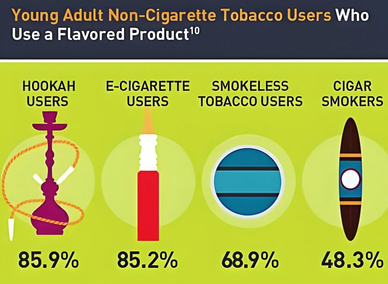
Use of these products has skyrocketed. This surge is heavily driven by 18-to-24-year-olds and those who have never smoked traditional cigarettes. "Tobacco-free" does not mean "risk-free". The growth is largely attributed to:
Addiction, Cancer, Cardiovascular and Oral Damage are still a very real and significant risk!

Many people assume that because vapes don’t create smoke, they must be less harmful. But the big difference isn’t the smoke, it’s the delivery system. Modern vapes use “nicotine salts,” which make it easier to inhale high levels of nicotine without the harsh burn you get from cigarettes.
Some popular devices contain as much nicotine as a whole pack of cigarettes, and because they feel smooth and subtle, teens may use them far more frequently. That combination - high nicotine plus easy inhalation - makes vaping just as addictive, if not more so, than traditional smoking for young people.
Vaping isn’t harmless, and it isn’t “just flavored vapor.” It’s a highly addictive nicotine product that’s easy to start, easy to hide, and tough to quit - especially for developing brains.

Secondhand Smoke: Eliminating indoor smoking completely is the only way to protect nonsmokers. Ventilation systems and air filters do not.
Thirdhand Smoke: Residue embeds deeply into everything and require professional cleaning, and often the replacement of soft furnishings to properly decontaminate.
Secondhand smoke is a significant public health concern and driver of smoke-free policies, and increases the risk for many diseases. Exposure to environmental tobacco smoke among nonsmokers increases lung cancer risk by about 20%. It is estimated to cause approximately 53,800 deaths annually in the US. Exposure in the home is also a risk factor for asthma in children.
Thirdhand smoke leave a chemical residue on surfaces where smoking has occurred, and can persist long after the smoke itself has been cleared from the environment. It is a potential danger, especially to children, who not only inhale fumes released by these residues but also ingest residues that get on their hands after crawling on floors or touching walls and furniture.

Many teens think that vaping is a healthy alternative to smoking traditional cigarettes with no downside.
Unfortunately, that’s just not the case. Aerosol from e-cigs and vape devices, is risky for your health. Some people believe the aerosol going into the lungs and exhaled out is just water vapor.
Lab tests show that aerosol is actually loaded with chemicals such as; diacetyl, nitrosamines, acrolein, diethylene glycol, propylene glycol, vegetable glycerin and, of course, nicotine. Even though some chemicals are “generally recognized as safe” to have in food and drinks, they are not necessarily safe for you to breathe into your lungs. Also, toxic chemicals like formaldehyde, acetaldehyde, and ultrafine particles have been found in vape aerosol. These chemicals have big names, but what are they exactly?

DIACETYL
Inhaling this chemical may cause permanent, severe, and potentially deadly lung disease. Breathing in diacetyl at high levels has been shown to cause a serious lung disease sometimes referred to as “popcorn lung”.
NITROSAMINES
Can cause cancer. They are volatile and highly flammable organic compounds, and some have been used in medication.
ACROLEIN
Used as a pesticide to control algae, weeds, bacteria, and mollusks. It’s also used to make other chemicals.
DIETHYLENE GLYCOL
A key ingredient used in antifreeze.
METAL AND FIBER PARTICLES
Metals like tin are present in vapor. Because these metals come from the device, they are not even present in regular cigarettes.

LUNG FUNCTION
Even if vapes have different bad effects than traditional cigarettes, vaping still reduces lung function. Breathing in the ultra-fine particles from vaping can irritate your lungs and may start an asthma attack. Studies have shown lung cell damage from vape juice—including those that have nicotine, and the chemicals used to make the flavors.
VAPES ARE BLOWING UP. LITERALLY
If you're thinking about health concerns from vaping, you’re usually thinking about the chemicals in the aerosol; not the devices themselves. But, guess what? Some vape devices have exploded and caused third degree burns to the face, chest, and hands.
POISONING AND CHOKING
You can get "nic sick," or overdose on nicotine, from vaping. Kids, pets and non-users can also get really sick or die if they swallow or even touch a very small amount of vape liquid.
HEART PROBLEMS
Breathing in aerosol can cause tightening or narrowing in your arteries, which could lead to a heart attack.