P.O. Box 10145 Danville, VA 24543

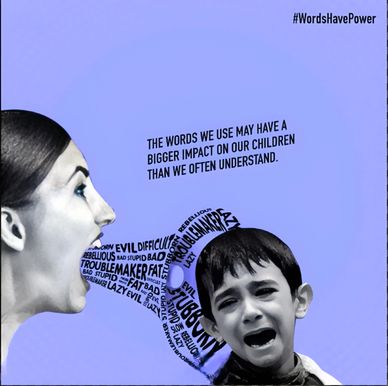
Not only do our words shape our own moods, visions, and our environment, but in large ways, they are also shaping our children.
Just as negative words can harm, positive words can heal. By using our language to intentionally build our children up, we can literally help change their self-talk which will affect their well-being lifelong.

Accidental fentanyl poisonings among young children under 10 (particularly toddlers aged 0 to 4) have surged dramatically due to extreme drug potency, unintentional home exposures, and widespread community availability. Mother, Cheyene Helms of Richmond, Kentucky, shares her story of losing her 4-year-year-old daughter, Brighton Hendron, to illicit fentanyl in this Texas Pictures documentary about the dangers of illegal drugs. "We aim to create a haven of support, compassion, and inspiration, anchored in faith."
You intended to harm me, but God intended it for good to accomplish what is now being done, the saving of many lives. Genesis 50:20

How you say it matters...
when it comes to talking with anyone, but especially parents speaking with teens and young adults.
In this mini-course, we break down what makes a question open-ended or closed, why that matters, and how each type can shape a conversation.
*disponible en español

This course was developed in partnership between National Federation of Families
National Family Support Technical Assistance Center Partnership to End Addiction
Harm Reduction Through the Family Lens is meant to provide basic information related to harm reduction and how it can be especially useful for family members and other professionals as they support a loved one through substance use.
Harm Reduction Through the Family Lens is an online self-paced training that offers an introduction to harm reduction, including tips for how families can incorporate these principles with loved ones.

This course is designed to help you understand why your child may be using substances and what you can do to help them make better choices.
Among other skills, you'll learn how to have better conversations with your child and use behavior management techniques that can make a big difference.
While the examples used in this training are geared towards parents and caregivers of younger teens (13 to 17-year-olds), the skills can be applied to older teens and young adults.

Join our free Online Support Meetings for parents & caregivers of children.
Hosted by specially trained parent coaches, with clinical oversight. We are solution-based, and we discuss real-life issues, and apply evidence-based skills and techniques to help address them.
FAQ's & Common Issues with online meetings

Do you suspect your child has ADHD? If you notice symptoms of inattention, hyperactivity, disorganization, and intense emotions, your child may benefit from an ADHD evaluation. Learn more about signs, diagnostic tests, and treatment options.
Understand the most common learning disabilities, such as, dyslexia, dyscalculia, dysgraphia, auditory and visual processing disorders, and nonverbal learning disorder — and how their symptoms differ from autism spectrum disorder.
Choosing to treat your child’s ADHD symptoms with medication and/or with natural treatments is a critical and nuanced decision complicated by dosage adjustments, side effects, and changing hormones. Click on the link below to get the answers to the 10 most commonly asked questions about ADHD medications.
40% of children with ADHD also develop oppositional defiant disorder. Kids with ODD demonstrate consistently angry, violent, and disruptive behaviors toward authority figures. Hear from other ADDitude readers and learn how to regain control as a parent with these ODD strategies.

All kids have times when they struggle to handle expectations. How they express that struggle has an impact on how adults respond. Some kids communicate through whining, pouting, sulking, crying, or withdrawing. These behaviors are likely to be responded to with empathy, nurturance, and support. Others are more troubling, like screaming, swearing, hitting, kicking, biting, and spitting. Regrettably, these behaviors are less likely to elicit empathy, nurturance, and support from caregivers.
No matter which group your family falls in, the concerning behavior is communicating the same thing: there’s an expectation the child is having difficulty meeting. And that means that there’s a problem that needs to be solved.
Lives in the Balance is a dynamic, values-driven non-profit organization devoted to ensuring that all kids are understood and treated in ways that are compassionate, effective, non-punitive, non-adversarial, proactive, and collaborative. Our efforts and impact are global. We provide vast resources and training on Collaborative & Proactive Solutions, an evidence-based model of care originated by our founding director, Dr. Ross Greene, and support grass-roots advocacy and legislation aimed at sharply reducing or eliminating the use of harmful, counterproductive disciplinary practices.
If you want to prevent crises rather than manage them, then you’ll need to be almost totally proactive, in other words, early in your approach to helping your students. Kids escalate when they’re having difficulty meeting certain expectations. Once a kid starts escalating or has already spun out of control, you’re late!! An unmet expectation (or what we call an unsolved problem) has already occurred.
So de-escalation is late…and restraint and seclusion are VERY late. We need to get EVERYONE out of the heat of the moment.