P.O. Box 10145 Danville, VA 24543

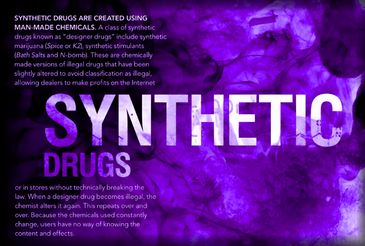
Synthetic drugs are man-made chemical substances created in laboratories to mimic the psychoactive or therapeutic effects of natural drugs like cannabis, cocaine, or opium.
Main Categories:
Synthetic drugs are man-made chemical substances created in laboratories to mimic the psychoactive or therapeutic effects of natural drugs like cannabis, cocaine, or opium.
Main Categories:
The internet is rife with "safe" and often "legal" ways to get high, or produce mind-altering effects from a number of synthetic, or man-made, materials. Convenience stores and gas stations are selling these substances under the guises of "plant food," "herbal incense," "potpourri," "jewelry cleaner," and "research chemicals." These substances are often labeled "not for human consumption" in order to avoid regulation by the U.S. Food and Drug Administration (FDA).
These products may be regularly misused for their euphoric and psychedelic or psychoactive effects. The issue is that most of these substances are unregulated, manufactured in illegal labs, and often imported from other countries. These drugs may have untested and unpredictable side effects.
Examples:
K2
Spice
Flakka - Gravel
Bath Salts
Smiles
2C
DMT
Molly

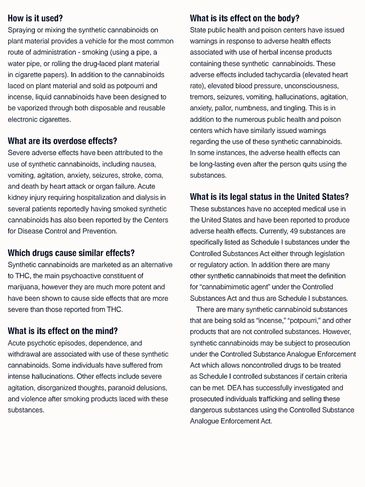
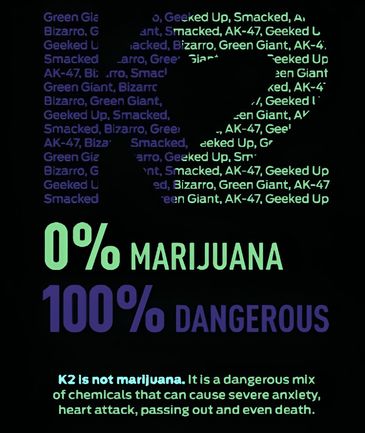
"There have been few scientific studies of the effects of synthetic cannabinoids on the human brain, but researchers do know that some of them bind more strongly than marijuana to the cell receptors affected by THC and can produce much stronger effects. The resulting health effects can be unpredictable and dangerous."
"There have been few scientific studies of the effects of synthetic cannabinoids on the human brain, but researchers do know that some of them bind more strongly than marijuana to the cell receptors affected by THC and can produce much stronger effects. The resulting health effects can be unpredictable and dangerous."
- The National Institute on Drug Abuse
Currently, there is no antidote for synthetic cannabinoid overdose/overintoxication, and clinical care typically only includes symptom management. However, naloxone, a drug used to treat opioid overdose, might prove beneficial. Treatment frequently involves a combination of psychotherapies and pharmacological therapies to address the addiction’s physical and psychological aspects. Treatment for synthetic marijuana abuse may vary depending on each person’s specific needs and circumstances.
"Benzodiazepines treat agitation and seizures, and antipsychotics may be required for unremitting psychotic symptoms."
- National Library of Medicine
Even though it is legal, using or abusing synthetic marijuana can have serious ramifications.